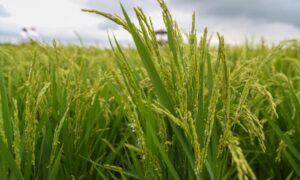
Africa expands rice varieties


Nigeria and other African countries are releasing improved rice varieties offering higher yields, climate resilience and better nutrition to address rising demand and import dependence. Nigeria approved five varieties in 2026, while AfricaRice’s KAFACI catalogue features 33 new varieties across 15 countries.
Nigeria and other African countries are expanding the release of improved rice varieties with higher yield potential, climate resilience and enhanced nutritional characteristics as scientists seek to narrow the continent’s widening rice supply gap.
The development is taking place against rising demand for rice across Africa, where consumption is growing faster than domestic production in many countries. Records from the National Centre for Genetic Resources and Biotechnology (NACGRAB) showed that five rice varieties were among the 57 crop varieties approved for registration and release by the National Committee on Naming, Registration and Release of Crop Varieties, Livestock Breeds/Fisheries at its meeting in March 2026.The five rice varieties are FARO 73, SG Rice 1, SG Rice 2, MIP 5803 and MIP 4802. The 57 approved crop varieties covered 14 crops, including maize, soybean, yam, onion, tomato, groundnut and cowpea.
NACGRAB said the varieties were developed by research institutes, universities and private seed companies to provide farmers with improved options suited to different production requirements and agricultural environments.The 2026 approvals followed an earlier expansion of the rice portfolio with the release of FARO 71 and FARO 72, the country’s first biofortified, zinc-enriched rice varieties.The Federal Ministry of Agriculture and Food Security said the varieties were developed to combine improved productivity with better nutrition. Agriculture and Food Security Minister Abubakar Kyari said the varieties offered higher zinc content and yield, as well as adaptability to savanna and rainforest ecologies, drought tolerance and resistance to pests and diseases.
“These varieties not only offer higher zinc content and yield but also climate resilience such as adaptability to Savanna and Rainforest ecologies, Drought tolerance and Pest and disease resistance, which make them a valuable tool for enhancing both the productivity and resilience of rice farming systems in vulnerable communities,” he said. The ministry said FARO 71 and FARO 72 were the first biofortified, zinc-enriched rice varieties released in Nigeria and Africa. It added that regular consumption could provide up to 40 per cent of daily zinc requirements. The varieties were developed through collaboration involving the Federal Ministry of Agriculture and Food Security, HarvestPlus, HarvestPlus Solutions and the National Cereals Research Institute, with support from the UK’s Foreign, Commonwealth and Development Office, Propcom+ and the Alliance for a Green Revolution in Africa.
The AfricaRice-Korea-Africa Food and Agriculture Cooperation Initiative (KAFACI) 2025 catalogue features 33 newly registered rice varieties across 15 African countries, compared with 26 varieties featured in the initiative’s first edition in 2024. AfricaRice said the varieties were selected not only for yield potential but also for traits such as grain quality, soft cooking and aroma, which are increasingly preferred by consumers in several African markets.AfricaRice said the KAFACI-AfricaRice partnership, which began in 2015, had developed and selected high-performing rice varieties adapted to different production conditions and market requirements. The initiative said its collaborative breeding pipeline had delivered 59 superior rice varieties. AfricaRice estimatedthat sub-Saharan Africa consumes about 38 million tonnes of rice annually and imports nearly 40 per cent of its requirement. The International Rice Research Institute (IRRI) reported that Africa is one of the world’s fastest-growing rice markets, with consumption increasing by about six per cent annually, while the region imports more than 40 per cent of its rice supply because of low productivity. In Sierra Leone, two AfricaRice-developed rice varieties, ROK 42 and ROK 43, were selected for national release and subsequently registered by the Sierra Leone Agricultural Research Institute.
AfricaRice said ROK 42 matures in about 100 to 110 days and is tolerant to flooding and iron toxicity. ROK 43 matures in about 90 to 95 days and combines high yield potential with drought and blast resistance and aromatic grain quality.
To Read more about Rice News continue reading Agriinsite.com
Source : The Nation