China rejects Indian rice consignments on alleged GMO presence, again

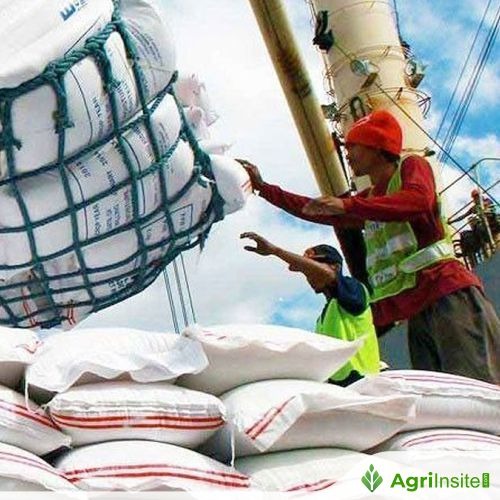
China continues rejecting Indian non-basmati rice shipments over alleged GMO content despite India stating no GM rice is cultivated domestically. Around 70 consignments have been rejected, raising exporter concerns and triggering fears of a possible trade dispute affecting India’s global rice export reputation.
China continues to reject Indian non-basmati rice consignments, alleging that they contain genetically modified organisms (GMOs) despite the government communicating that no GM crop is grown in the country. This has triggered the fear that Beijing is waging a trade war with New Delhi.
“Last week, China rejected 4-5 consignments, alleging they contained GMOs. There is more than what meets the eye with the rejection,” said a trade source who is tracking the issue closely.
Official sources alleged that China was trying to malign India’s image in the global market, knowing well that India does not grow any GM crop, barring cotton.
Spoiling Indian image
“China is trying to spoil our image. It is known to do such things and has done this before,” an official said on condition of anonymity. Beijing, however, grows GM rice.
In March, Chinese authorities turned away three shipments, alleging they contained GMOs. Following this, on April 30, the Ministry of Environment and Forests issued an office memorandum stating that the Genetic Engineering Appraisal Committee (GEAC), the regulatory authority for GM crops, has not approved any GM rice in India.
On April 23, the Indian Council of Agricultural Research’s Assistant Director-General SK Pradhan wrote to the Agricultural and Processed Food Products Export Development Authority (APEDA) that India does not cultivate GM rice. He told the authority that the Ministry of Agriculture has not recommended any GM rice for commercial cultivation in the country.
70 rejections so far
Sources said about 70 consignments have been rejected by Chinese authorities despite the Indian office of China Certification & Inspection Group (CCIC), a Chinese State-owned company, inspecting and certifying the shipments.
The rejection has put some exporters on the back foot, with at least 200 containers being voluntarily held back from being shipped out. In March, the Chinese authorities suspended import licences of three Indian firms on charges of shipping rice with the presence of GMOs.
“India has firmly said no GM rice is grown in the country. Despite the Chinese knowing this, they are rejecting our consignments. It signals that they are indulging in some trade war with India,” said a trade source, who did not wish to be identified in view of the sensitivity of the issue.
‘Deep narrative’
S Chandrasekaran, author of “Basmati Rice: The Natural History Geographical Indication”, said: “We cannot look at the rejection of Indian rice on the allegation of presence of GMOs as just a stray incident. It looks like a deep narrative is getting unveiled on Indian agriculture and food exports to distort and divert from other issues (like supporting a rival).”
The official said China could be given the benefit of the doubt. “It could be that China jumped to a wrong conclusion. Or it may not be scientifically right. Either way, it is wrong,” he said.
A trader from North India said China was rejecting rice shipments as it was trying to undermine India’s competitiveness in the global market. However, another trader said China would build inventories in case of prices being lower, and this strategy was more towards trying to gain leverage ahead of trade discussions.
Talks with GACC
The source monitoring the developments said Indian officials held talks with General Administration of Customs of China (GACC) officials last week. “The Chinese officials are not explaining the methodology for rejecting our consignments,” the source said.
Confirming the development, the official said there could be chances of rice from other countries being mixed with Indian cereal at some other port. “It may also be possible that rice from another country is branded as Indian. Chances of such things happening are slim. China is one of the few countries that is not transparent with its dealings,” he said.
To Read more about Rice News continue reading Agriinsite.com
Source : The Hindu Businessline