India needs balanced use of feedstock for ethanol production: ISMA

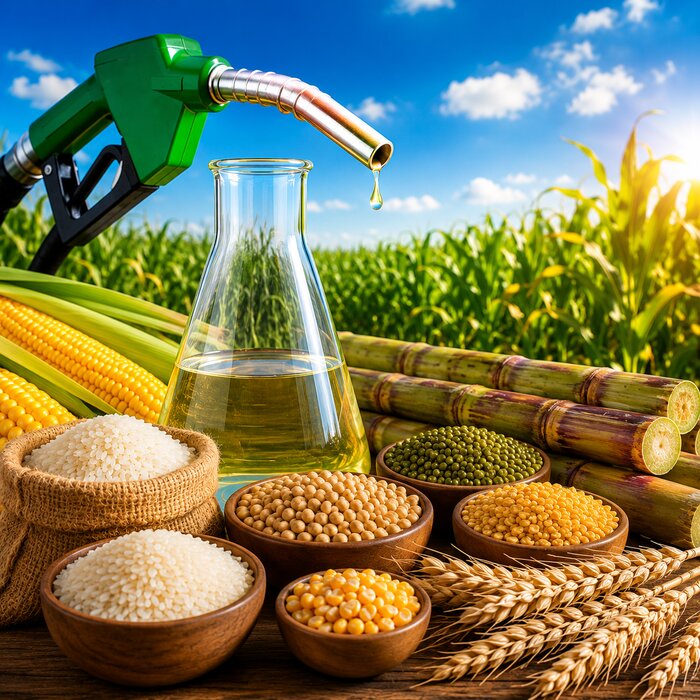
ISMA urged India to adopt a flexible ethanol feedstock policy, balancing sugarcane, maize and surplus rice according to annual availability. Director General Deepak Ballani also warned of potential sugar shortages, stressed improved forecasting and crop varieties, and sought financial relief for mills facing restrictions on ethanol production.
New Delhi: India should adopt a flexible approach to selecting feedstocks for ethanol production instead of depending heavily on either of the feedstock, the Indian Sugar & Bio-Energy Manufacturers Association (ISMA) has said.
Speaking to The Tribune, ISMA Director General Deepak Ballani said no single feedstock could meet the country’s entire ethanol requirement. He said the government needed to balance the use of different raw materials based on their availability and production in a particular year.
Ballani said the ethanol blending programme was initially designed to make use of surplus sugarcane-based products that might otherwise go to waste. When the programme began, ethanol demand was relatively low, with blending levels of around 2%, 5%, 6% and 7%, but demand gradually increased.
He said it would not be appropriate to claim that one feedstock could meet the country’s entire ethanol demand. Instead, the government should follow a flexible policy and decide how much sugarcane, maize or surplus rice could be diverted for ethanol production, depending on annual availability.
The comments come amid concerns over India’s sugar production prospects for the 2026-27 season. National Federation of Cooperative Sugar Factories president Harshvardhan Patil recently warned that the country could face a sugar shortage next season because of concerns over production, domestic demand and the availability of opening stocks.
Responding to concerns about a possible sugar shortage, Ballani said dry weather had affected sugar production prospects for 2026-27. Production in Maharashtra and Karnataka could decline, but the extent of the impact remained uncertain.
India requires around 285 lakh metric tonnes (LMT) of sugar for domestic consumption in the current year. It also needs opening stocks of at least 50 LMT for the next season, taking the total requirement to approximately 335 LMT.
Ballani said better production estimates, carefully planned export decisions and the development of improved sugarcane varieties would be important to prevent future shortages. Although India has a system to estimate sugar demand and supply, he said further improvements were needed in production forecasting, fuel and food policies, and stock monitoring.
He also stressed the need to provide farmers with certified breeder seeds to improve sugarcane yields.
According to Ballani, the development of better sugarcane varieties could help increase production, but excessive dependence on a single variety could create serious problems. He cited Uttar Pradesh as an example, where the widespread use of the Co 0238 variety led to a lack of genetic diversity across the state’s sugarcane-growing area.
The variety covered more than 86% of Uttar Pradesh’s sugarcane area by 2020-21. Its widespread use was followed by a serious decline in resistance to red rot disease. State sugar production fell from 126.4 LMT in 2019-20 to 89.5 LMT in 2025-26, he said.
Ballani also called for a suitable sugar pricing policy that takes sugarcane prices into account. He said ISMA was in discussions with the government on the issue and added that both pricing and sugarcane development needed attention.
On the financial impact of restrictions on diverting sugarcane-based products for ethanol production, Ballani said sugar mills had invested around Rs 40,000 crore in setting up distilleries. Many factory owners had taken substantial loans to establish these facilities.
He said mills could face financial losses if they were unable to operate their distilleries at full capacity. ISMA was discussing possible relief measures with the authorities, including extensions of loan repayment moratoriums, adjustments to interest payments and other policy support, he added.
To Read more about Ethanol Industry & Bio Energy News continue reading Agriinsite.com
Source : ChiniMandi