India’s kharif acreage nearly catches up with last year despite 15% deficit rainfall

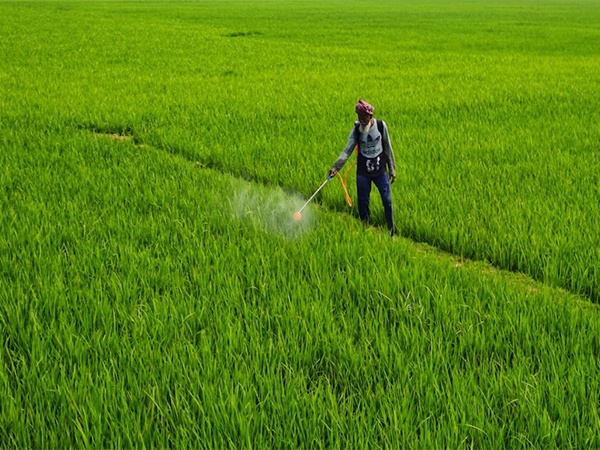
India’s kharif sowing reached 110.39 million hectares by September 18, just 1.3% below last year. Rice, maize, cotton and sugarcane acreage declined, while pulses, coarse cereals and oilseeds gained marginally. Uneven monsoon rainfall and a 15% deficit remain concerns for crop development.
India’s kharif sowing acreage has almost caught up with last year’s level, although the overall figure masks declines in several important crops, including rice, maize, sugarcane and cotton, reported Mint.
Farmers had covered 110.39 million hectares as of September 18, according to agriculture ministry data, 1.3% lower than the 111.89 million hectares recorded a year earlier. The current acreage is also broadly in line with the ministry’s normal benchmark of 110.4 million hectares.
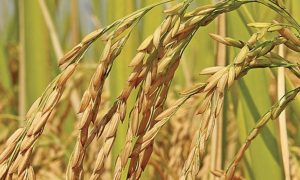
Rice, a major foodgrain crop, saw its acreage fall 3.7% year-on-year to 42.9 million hectares.
Pulses provided some support to overall kharif acreage, with coverage rising 1.4% to 11.9 million hectares. The increase was driven by higher sowing in Uttar Pradesh, Jharkhand, Telangana, Rajasthan, Madhya Pradesh and Andhra Pradesh.
Acreage under coarse cereals and oilseeds also edged higher, while cotton and sugarcane remained below their year-earlier levels.
Agricultural experts said the uneven monsoon and a 15% rainfall deficit remained concerns for crop development. They said future agricultural resilience would depend increasingly on raising productivity and making more efficient and sustainable use of cultivated land.
Uday Raj Anand, chief executive officer, domestic business, Parijat Industries, said the strength of Indian agriculture should be measured not only by the area brought under cultivation but also by how efficiently and sustainably each hectare is managed.
The area under Shri Anna and coarse cereals stood at 18.5 million hectares, slightly higher than 18.4 million hectares a year earlier.
The increase was supported by higher acreage in Rajasthan, Chhattisgarh, Odisha, Madhya Pradesh, Uttar Pradesh, Bihar, Jharkhand and Uttarakhand.
However, maize acreage declined to 9.27 million hectares from 9.48 million hectares a year earlier.
Oilseed acreage increased marginally to 19.4 million hectares, gaining more than 1,000 hectares from the year-earlier period. The rise was limited by lower sowing of soybean and groundnut, which offset gains in crops such as sesame and sunflower.
Cotton acreage also declined marginally to 10.9 million hectares from 11 million hectares last year.
The reduction in cotton coverage was largely driven by substantial declines in Rajasthan and Haryana, followed by lower acreage in Punjab and Andhra Pradesh. These losses more than offset increases recorded in Madhya Pradesh, Telangana and Gujarat.
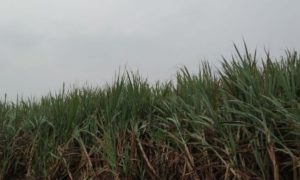
Sugarcane acreage stood at 5.84 million hectares, slightly below the 5.88 million hectares recorded a year earlier.
The India Meteorological Department has forecast favourable conditions for the withdrawal of the southwest monsoon from the remaining parts of Punjab, Haryana-Chandigarh and Delhi, some more areas of Rajasthan, and parts of Saurashtra and Kutch, Jammu & Kashmir, Himachal Pradesh, Uttarakhand and west Uttar Pradesh over the next two to three days.
The southwest monsoon normally begins withdrawing from western Rajasthan in September before progressing towards other parts of northwest and central India, followed by the southern peninsula and eastern regions.
The withdrawal marks the transition towards the post-monsoon season, although its pace remains dependent on prevailing rainfall and atmospheric conditions.
To Read more about Rice News continue reading Agriinsite.com
Source : ChiniMandi