Paddy growers of Karnataka’s ‘Rice Bowl’ advised to opt for alternative crops


Low Tungabhadra dam storage has forced Karnataka farmers to shift from paddy to less water-intensive crops such as maize, jowar, sunflower and pulses. Scientists and officials warned against transplanting over-aged paddy seedlings and advised drought-resistant alternatives as limited water threatens yields and cultivation in key rice-growing districts.
Kalaburagi: Paddy growers in the Tungabhadra command area, known as the ‘Rice bowl of Karnataka’, are left with no choice, but to switch to alternative crops like jowar, maize, Bengal gram, sunflower and mustard.
Scientists from the Gangavati Centre of the Agriculture Research Station advised farmers to opt for these low water-intensive crops because the dam’s storage level reached only 35 tmcft against its maximum capacity of 105.788 tmcft.
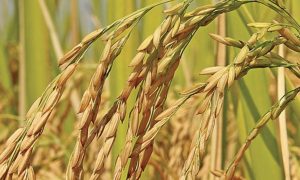
The sowing operation for paddy had to be undertaken at brisk pace by the end of July in Raichur, Koppal, Ballari and Vijayanagar districts, which are known for producing aromatic medium-grain Sona Masuri rice. The farmers had deprived water in the last season owing to replacement of the dam’s crest gates.
Farmers had already raised paddy nurseries in June, wherever a water source was available. However, the seedlings reached 45-50 days of age, making them unsuitable for transplanting due to the non-availability of canal water. The agriculture scientists claimed that the paddy transplantation undertaken by a few farmers is not healthy due to the high temperature and salinity. Reduced rainfall resulted in shrinking of borewell water damaging the transplanted crops wind. Therefore, they suggested alternative measures for farmers in the middle and tail-end regions to grow crops like millet, sesame.
“We have prepared contingency crop planning to advise the farmers to use short-duration rice varieties, viz., RNR15048, Kaveri Sona, GNV 10-89, IET19251 for sowing after receiving either rainfall or canal water. But, there is no adequate water in the dam; hence, farmers are advised to go for rabi crops like maize, white jowar, sunflower,” said Mahant Shivayogayya, the paddy breeder and senior scientist at the Agricultural Research Station in Gangavati.
Awareness campaign
Meanwhile, Agriculture department officials have also stepped up the awareness campaign among the farmers of the Tungabhadra command area to grow alternative crops. Stating that paddy seedlings older than 45 days is considered over-aged, Koppal Agriculture Department Joint Director J D Krishnamurthy said that transplanting them will provide a lower yield.
“The sowing operation has been undertaken only in 1.7 lakh hectares out of the total 3.49 lakh hectares under cultivation in the district. The possibility of water release from Tungabhadra dam is very low. Therefore, we are advising the farmers to grow drought-resistant alternative crops like millet, jowar, horse gram which will help produce fodder for the cattle,” Krishnamurthy said.
Meanwhile, Ballari Agriculture Department Joint Director K M Somasunder said that a meeting is being held with the farmers at the hobli and taluk-level in consultation with the scientists from the University of Agricultural Sciences, Raichur to convince them to grow finger millet, foxtail millet, jowar. “More than 75% of the total 1,59,546 hectares of farmland comes under the Tungabhadra command area in Ballari district. We are suggesting these farmers to grow alternative crops by treating it as rain-fed land if water is not released from the dam,” he said.
Karnataka Rajya Raitha Sangha Honorary President Chamarasa Malipatil said that the yield will be reduced and the cost of cultivation will also increase if the farmers start growing paddy after the first week of August, as cold winter temperatures will harm crop pod formation.
“The water is available only to meet the drinking water needs. Therefore, we are not in a position to exert pressure on the Irrigation Consultative Committee to release water to the canal as at least 70 tmc is required to irrigate the paddy crop for one season. Therefore, the farmers should grow less water-intensive alternative crop,” he said.
To Read more about Rice News continue reading Agriinsite.com
Source : Deccan Herald