Hyderabadis get the sour taste of inflation as sugar prices up 78%

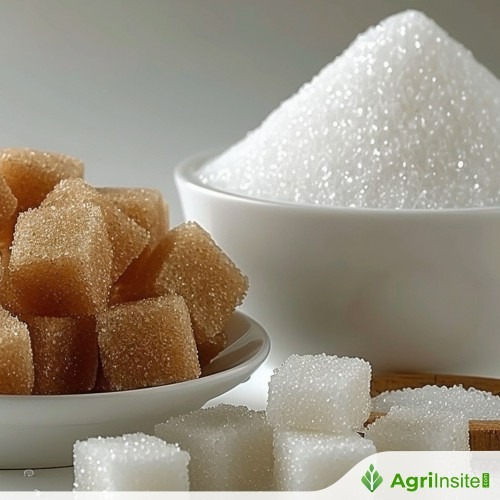
Sugar prices in Hyderabad have surged nearly 78% from ₹45 to ₹80 per kg, adding pressure on Telangana households ahead of the festive season. Rising prices of sugar, edible oils and rice have contributed to persistent inflation, with Telangana recording the highest state retail inflation rate at 6.32% in July.
HYDERABAD: Telangana households are getting the sour taste of inflation, with sugar prices in Hyderabad rising nearly 78% from Rs 45 to Rs 80 per kg, just as festive demand is expected to pick up. The sharp increase is adding to household grocery bills while raising input costs for sweet shops, bakeries and caterers that use sugar in large quantities.
The rise comes against a broader inflationary backdrop. Telangana recorded retail inflation of 6.32% in July, the highest among states for the seventh consecutive month, compared with the national rate of 4.45%. Rural inflation in the state stood at 6.86%, while urban inflation was 5.92%.
For consumers, sugar is among the most visible recent price increases. A 5 kg purchase that cost around Rs 225 at Rs 45 per kg now costs about Rs 400. The impact could be greater during the festive season, when households traditionally buy more sugar for sweets and other preparations.
Sweet shops and caterers are also likely to face higher production costs if prices remain elevated.
Retailers said the increase was already affecting buying patterns, with some customers purchasing smaller quantities and others stocking up in anticipation of further price rises. “Customers are asking about the price before buying. Earlier, many households would pick up five or 10 kg at a time, but now they are buying only what they need. At the same time, some regular customers are buying extra sugar because they fear prices could rise further,” said Hiten, a Hyderabad retailer.
However, retailers cautioned consumers against excessive hoarding during the monsoon. High humidity and moisture can cause sugar to cake and deteriorate when stored for long periods in poorly ventilated or damp spaces. “People may think buying 10 or 20 kg now will protect them from further price increases, but sugar has to be stored carefully during the monsoon,” Hiten pointed out.
Price rise visible across food, transport, healthcare sectors
“Moisture can cause clumping and prolonged storage in unhygienic conditions can lead to infestation and wastage, which could wipe out the benefit of buying in bulk,” Hiten added.
According to the Price Monitoring Division, sugar is not the only kitchen staple to have seen significant price movements. Sunflower oil has recorded one of the sharpest increases in Telangana, rising from Rs 110.50 per kg in August 2024 to Rs 192.73 in August 2026 — a 74.4% increase. Karnataka recorded a 68.1% rise, from Rs 114.38 to Rs 192.25, while Tamil Nadu saw a 67.3% increase, from Rs 115.71 to Rs 193.58. Andhra Pradesh recorded a 63.4% rise, from Rs 115.50 to Rs 188.67.
The longer-term picture, however, is less dramatic. Telangana’s sunflower oil price was Rs 179 per kg in August 2022, making the increase to Rs 192.73 in 2026 just 7.7%. Prices had fallen considerably by 2024 before rising again.
Rice, another major component of the food basket, has also become costlier over five years. In Telangana, prices rose from Rs 41.80 per kg in August 2022 to Rs 57.64 in August 2026, an increase of 37.9% — the highest among the four southern states compared. Karnataka recorded a 27.9% rise, from Rs 48.25 to Rs 61.72, while Tamil Nadu saw a 24.4% increase, from Rs48.44 to Rs 60.25. AP recorded an 8.7% rise, from Rs 51 to Rs 55.44.
Not all commodities have moved upwards. Toor dal (pigeon pea) has fallen substantially from its 2024 peak. In Telangana, its price rose from Rs 99.20 per kg in 2022 to Rs 163.50 in 2024 before declining to Rs 124.73 in 2026. The latest price is 23.7% below the 2024 level, though still 25.7% above the 2022 price. AP saw toor dal prices fall from Rs 166.25 in 2024 to Rs 117 in 2026, while Karnataka recorded a decline from Rs 163.86 to Rs 121. Tamil Nadu saw prices fall from Rs 172.89 to Rs 131.31.
Telangana’s retail inflation rose from 4.92% in January to 6.32% in July, after touching 6.36% in June. The state had recorded deflation in five months during 2025, making the current reversal particularly notable.
The rural-urban gap is also significant, with rural inflation at 6.86%, indicating that price pressures are being felt beyond Hyderabad and other urban centres. Nationally, retail inflation rose to 4.45% in July, while food inflation reached 5.52%.
“Telangana’s inflation is no longer being driven by one or two commodities alone,” said economist B Sudhakar Reddy, director, ICSSR-SRC and dean of the Faculty of Social Sciences at Osmania University. “The rise is visible across food, transport, housing, healthcare and services, which makes it more difficult to contain.”
The inflation picture has also been influenced by the rebasing of the CPI series in 2024. Economists note that Telangana’s current position at the top of the inflation rankings is particularly striking as the state had recorded the country’s lowest inflation just a year earlier.
“In March 2025, inflation in Telangana stood at only 1.06%, and the state even experienced periods of deflation during mid-2025. This dramatic turnaround reflects both changes in statistical weighting under the new CPI series and genuine increases in the cost of living,” Sudhakar added.
The Price Monitoring Division tracks 38 essential commodities through 575 reporting centres, with retail and wholesale prices collected daily through a geo-tagged and time-stamped system. Authorities also monitor production, stocks, procurement, weather and domestic and international prices. For consumers, the festive season could therefore bring a substantially heavier grocery bill.
To Read more about Sugar Industry continue reading Agriinsite.com
Source : The New Indian Express