Jammu Kashmir Paddy Farmers Face Early Harvest, Uneven Yields Amid Climate Change

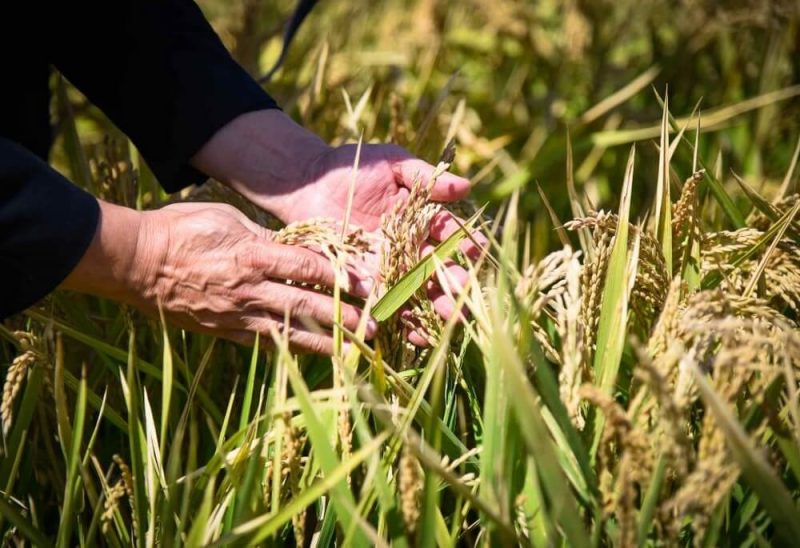
Paddy crops in Jammu and Kashmir matured earlier than usual this year due to weather variations and seedling age, causing mixed yields. Meanwhile, Jammu expects strong government procurement at ₹2,461 per quintal, while basmati growers rely on private markets and face localized waterlogging challenges.
Srinagar: Across the paddy fields of Jammu and Kashmir, the harvest has arrived with a surprise this year. In several parts of the region, farmers say their crop has matured earlier than usual, bringing them to the fields sooner than expected.
For farmers, the timing of the harvest is only part of the story. They are also watching their yields, weather conditions, access to procurement centers and the prices they will receive for their crop. These factors can make the difference between a season that brings a reasonable return and one that leaves farmers struggling to recover their costs.
Paddy harvesting in Jammu and Kashmir generally begins in late September and continues through October, although the timing varies with the variety, location and weather. This year, farmers in some areas of Kashmir say the crop has ripened noticeably earlier, adding another uncertainty to an already important season for thousands of farming families.
In Jammu, agriculture officials are expecting a strong harvest of common paddy and Grade A rice, while basmati growers continue to face a different market situation because the crop is not directly procured by the Food Corporation of India.
The differences highlight the range of challenges facing paddy farmers across the Union territory, where rice cultivation remains an important source of income despite a gradual reduction in the area under the crop.
In south Kashmir’s Pulwama district, harvesting has already started in several low-lying areas. Some farmers say their crop matured earlier than expected, raising questions about the role of weather, crop varieties and farming practices.
Irshad Ahmad, a farmer from Pulwama, said some farmers began harvesting around September 10, while he started harvesting around September 15.
He said paddy harvesting in the Patlu area traditionally started later, often around October, but the crop appeared to have matured earlier this year.
Ahmad estimated that around 10% to 20% of the paddy in his area was still not fully mature and retained moisture. He said agriculture experts should examine why some fields reached maturity earlier than normal.
Farmers generally expect paddy to mature about 120 days or more after transplanting, although the actual period varies depending on the variety, nursery age, transplanting date, temperature and other conditions.
Ahmad said some varieties, including SR-4, also matured relatively early this season. He observed that flowering in some fields had been completed in July.
He believes changing weather conditions may have played a role. At the same time, he said his own crop appeared to have matured about 20 days earlier than in previous years.
Early maturity has not necessarily translated into higher yields. Ahmad said he harvested about four quintals from his crop last year but expects around 3.5 quintals this year.
Agriculture experts, however, say it would be premature to attribute the change entirely to climate change. Javid Ahmad, head of Krishi Vigyan Kendra in Pulwama, said paddy generally takes around 120 to 125 days to mature after transplanting.
He said reports of crops maturing in much shorter periods need to be examined on a case-by-case basis because several factors can influence crop duration.
Changes in temperature and weather conditions can affect crop development, he said. The age of the nursery at the time of transplanting can also be important.
If older seedlings are transplanted into the field, the plants have already completed part of their growth cycle, which can make the crop appear to mature earlier after transplanting.
Javid Ahmad said the overall crop duration should therefore not be assessed only from the date of transplanting. The complete crop cycle, including nursery development, variety and field conditions, needs to be considered, he said.
The production picture is also different from one area to another. According to Javid Ahmad, yields of around 80 to 85 quintals per hectare have been recorded in some areas of Pulwama. Some fields have produced around 90 quintals per hectare, while departmental records from certain locations have reached about 100 quintals per hectare.
At the same time, some areas have recorded lower yields. Weather conditions could be one of the factors, he said. The season experienced relatively cloudy conditions and continued rainfall in some periods, which may have affected crop maturity and production.
Despite these variations, he said the information available so far suggests that the overall crop situation in the district remains satisfactory, although some locations have seen a modest decline in yields. The contrasting observations from farmers and experts point to the need for field-level studies rather than a single explanation for early maturity.
Seed variety, nursery age, transplanting time, temperature, rainfall, water availability and crop management can all influence the growth and maturity of paddy. For farmers, however, the timing of harvest is closely linked to the economics of cultivation.
A crop that matures early can help farmers complete harvesting before unfavorable weather arrives. But uneven maturity can create difficulties, particularly when part of a field is ready while the remaining crop still contains moisture.
Farmers also have to consider harvesting and drying costs, availability of labor and machinery, storage facilities and the price available in the market.
In the Jammu region, farmers growing common paddy and Grade A rice are expecting a relatively strong season. The agriculture department is preparing 27 procurement mandis with support from the Food Corporation of India. Officials have also requested two additional mandis to improve access for farmers.
Director Agriculture Jammu Anil Gupta said 23 mandis were established last year and FCI procured about 4.98 lakh quintals of common paddy and Grade A rice. The procurement generated about Rs 112 crore for farmers, according to the department.
Officials expect procurement to increase this year and say the expansion of procurement centers is intended to reduce the distance farmers have to travel to sell their produce.
The procurement system is particularly important for common paddy and Grade A growers because FCI purchases these varieties directly through designated mandis.
Payments are transferred directly into farmers’ bank accounts, according to agriculture officials. The minimum support price for common paddy and Grade A rice was Rs 2,441 per quintal last year, while the figure has been fixed at Rs 2,461 per quintal this year, according to officials from the agriculture production department.
The procurement arrangement gives farmers a more predictable market compared with crops that depend heavily on private buyers.
Basmati growers in Jammu, Samba and Kathua face a different set of market conditions. According to official agriculture data, about 60,804 hectares are used for basmati cultivation in the three districts.
Jammu’s aromatic basmati has also received a geographical indication tag and is included under the One District One Product initiative. Unlike common paddy and Grade A rice, basmati is not directly procured by FCI. Farmers generally sell the crop to mill owners and other private buyers. This can expose growers to greater price variation.
Agriculture officials said some basmati growers have shifted toward common paddy and Grade A varieties because of the availability of FCI procurement.
That shift could affect the quantity of basmati available in the market this season. Officials said market prices for basmati rice have also been rising at the retail level, although the price paid to farmers depends on several factors, including quality, demand, variety and negotiations with buyers.
While Jammu is expecting a strong paddy harvest overall, farmers in some pockets remain worried about lower yields and income. In Mangu Chak near Miran Sahib, about 10 kilometers from RS Pura, farmers say damage to an irrigation canal and waterlogging have affected cultivation. Chain Dass, a former village panch, said last year’s floods submerged farmland and damaged the canal that supplied water to the area. The canal has not been repaired, he said, leaving farmers largely dependent on rainfall.
Dass said stagnant floodwater has also remained a problem after the construction of the Jammu Ring Road, with limited drainage in the area. As he looked over his paddy field, he said his main concern this season was earning enough to repay his Kisan Credit Card loan.
The production challenges facing farmers are also driving agricultural research in Kashmir. At Khudwani in Kulgam, the Mountain Research Centre for Field Crops has recently been upgraded into the Faculty of Agriculture, South Campus, under Sher-e-Kashmir University of Agricultural Sciences and Technology of Kashmir.
The institution, spread over about 380 kanals, was established in 1942 as a rice research station. Over more than eight decades, the center has worked on field crops, crop improvement, climate-resilient agriculture, field trials, germplasm conservation and the transfer of agricultural technology to farmers.
The center has worked on traditional and locally important varieties such as Mushk Budji, red rice, Shalimar Sugandh, China and Jehlum, along with several SR varieties. Officials said the center produces around 500 quintals of foundation and breeder seed annually.
Professor Aashiq Hussain, who teaches agronomy at the South Campus, said research is aimed at developing crop varieties and farming technologies suited to different agricultural and climatic conditions. The objective is to improve productivity while helping crops withstand changing weather conditions.
The center is also working on crop diversification. Research and field activities include sweet corn, sunflower, gobhi sarson and other oilseed crops.
Farm in-charge and agronomy professor Nazir Ahmad Teli said research is also focused on disease-resistant varieties and crops capable of producing higher yields from limited land.
According to Teli, different rice varieties and farming practices are being evaluated for areas facing water shortages and drought-like conditions. Varieties including SR and K-332 are being tested under different agro-climatic conditions.
Such research could become increasingly relevant if water availability and weather patterns become less predictable. The research effort also extends beyond Jammu and Kashmir.
Plant breeding and genetics scientist Farooq Ahmad said varieties and research material are tested for different regions, including northeastern states. He said material is exchanged with states such as Manipur, Assam and Himachal Pradesh. Around 20 varieties are sent each year under different programmes, while about 60 varieties are currently part of testing programmes.
The center also sends seed samples to the central facility in Hyderabad for testing and evaluation before they are supplied to other research programs.
To Read more about Rice News continue reading Agriinsite.com
Source : ETV Bharat