Govt raises edible oil import benchmarks

India’s kharif paddy acreage fell 3.65% to 379.07 lakh hectares amid a 12% monsoon deficit, raising rice supply concerns. FCI wheat stocks reached a five-year-high of 50.5 million tonnes, while rice stocks hit a 1998-high. Edible-oil import benchmarks were revised, and maize prices strengthened on demand.
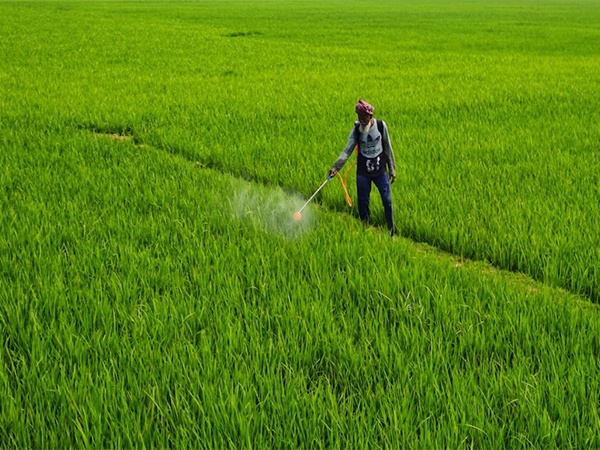
India’s kharif paddy sowing has taken a rainfall hit, shrinking by 14.37 lakh hectares from last year as deficient monsoon showers curbed planting across key producing states, led by Karnataka, Jharkhand and Maharashtra.
Paddy acreage stood at 379.07 lakh hectares as of August 14, down 3.65% from 393.44 lakh hectares in the corresponding period last year, according to Agriculture Ministry data released on Monday.
The setback comes as the southwest monsoon continues to trail normal levels, raising concerns over crop development, yields and the broader rice supply outlook if rainfall fails to recover during the remaining season.
Paddy takes hit: Kharif sowing typically gathers pace with the onset of the southwest monsoon in June. Planting was delayed this year as El Niño conditions disrupted rainfall across several agricultural belts. Karnataka recorded the steepest drop in paddy acreage at 2.86 lakh hectares, followed by Jharkhand at 2.26 lakh hectares and Maharashtra at 2.25 lakh hectares.
Odisha reported a 2.09-lakhhectare decline, while acreage fell by 1.64 lakh hectares in Madhya Pradesh, 1.49 lakh hectares in Telangana and 1.14 lakh hectares in Andhra Pradesh.
Stay resilient: The broader sowing picture was relatively stable for pulses and oilseeds. Pulses covered 108.14 lakh hectares, marginally below 108.49 lakh hectares last year. Arhar acreage slipped to 40.31 lakh hectares from 42.01 lakh hectares, while moong fell to 32.05 lakh hectares from 33.42 lakh hectares.
Urad provided a bright spot, climbing to 23.52 lakh hectares from 20.79 lakh hectares. Oilseeds narrowed their earlier acreage gap, with sowing reaching 184.46 lakh hectares against 185.36 lakh hectares a year ago.
Cereals remain soft: Coarse cereals acreage fell to 172.96 lakh hectares from 177.13 lakh hectares. Among cash crops, sugarcane coverage eased to 58.31 lakh hectares from 58.62 lakh hectares, while cotton acreage declined to 107.30 lakh hectares from 108.26 lakh hectares. Jute and mesta bucked
Rainfall remains key: The acreage decline comes against a persistent monsoon shortfall. India Meteorological Department data showed cumulative rainfall was 12% below normal up to August 12. The east and north-east faced the sharpest deficit at 26%, followed by the southern peninsula at 19% and northwest
India at 11%. With paddy being highly water-dependent, rainfall over the coming weeks will be crucial. A sustained deficit could keep acreage and yields under pressure, tightening the rice production outlook and potentially adding another risk to food-price inflation.
The real test now lies beyond planting. Prolonged weather stress could squeeze yields, restrict market arrivals and push food prices higher, turning an agricultural setback into a wider inflation risk. Rice carries particular weight because it feeds households, procurement programmes and public buffer stocks.
A late rainfall recovery may offer relief, but uneven showers could still leave vulnerable regions exposed.
Crop health, reservoir storage and supply flows will now determine whether the pressure remains contained or spreads.
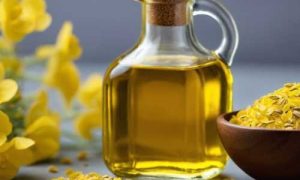
The government has raised base import prices for most edible oils by $2-$8 per tonne, while cutting the benchmark for crude palm oil by $3 per tonne, according to a Central Board of Indirect Taxes and Customs notification.
The revised tariff values came into effect on Aug. 15.
Crude palm oil’s base import price was lowered to $1,208 per tonne from $1,211. In contrast, refined, bleached and deodorised (RBD) palm oil was marked up by $8 to $1,220 per tonne. Crude palmolein and RBD palmolein benchmarks were raised by $5 each to $1,227 and $1,230 per tonne, respectively. Crude soyoil’s base import price increased by $2 to $1,257 per tonne.
India is the world’s largest edible-oil importer, with palm oil forming the dominant share of inbound shipments, primarily sourced from Indonesia, Malaysia and Thailand. The benchmarks were last revised on July 31 and typically undergo fortnightly recalibration.
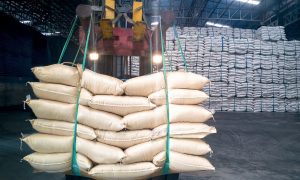
India’s wheat reserves opened August at a five-year high despite a monthly decline, while spot prices weakened in some markets as millers slowed purchases in anticipation of government open-market sales.
Food Corporation of India (FCI) wheat stocks stood at 50.5 million tonnes on August 1, down 3.4% from July but nearly 46% higher y/y.
Procurement reserves: The strong inventory follows robust procurement during the 2026-27 rabi marketing season.
The government purchased 35.76 million tonnes of wheat, up more than 19% from a year earlier and above its revised target of 34.60 million tonnes. Stocks are comfortably above the July 1 buffer requirement of 27.58 million tonnes, including 24.58 million tonnes of operational stocks and a 3million-tonne strategic reserve.
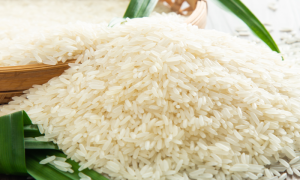
Rice stocks stood at 40.2 million tonnes, down 0.2% month-on-month but nearly 6% higher y/y.
Rice reserves are at their highest since 1998 and well above the July buffer requirement of 13.54 million tonnes.
Total FCI foodgrain stocks stood at 92.6 million tonnes, against 72.6 million tonnes a year earlier. ease: in some key spot markets on Monday.
In Indore, wheat declined by ₹10 to ₹2,860 per 100 kg as millers reduced purchases while awaiting clarity on the government’s
Open Market Sale Scheme. Traders expect such sales before Diwali.
In Kota, wheat fell ₹30-40 to ₹2,570-2,610 per 100 kg, with arrivals steady at 6,000 bags of 50 kg each. Vashi prices remained unchanged at ₹2,900 per 100 kg.
gains: Maize in Indore climbed ₹55 to ₹2,850 per 100 kg, supported by low arrivals and demand from poultry-feed manufacturers, retailers and the approaching festival season. Davanagere maize remained steady at ₹2,650. Rice prices in Vashi were unchanged.
The 1401 basmati variety traded at ₹9,600-9,700 per 100 kg, while 1509 stood at ₹8,400-8,500 and 1121 at ₹10,000-10,200. Traders are monitoring the kharif crop closely.
Paddy acreage was nearly 4% lower y/y at 37.91 million hectares as of Friday, with fresh crop arrivals expected from September.
To Read more about Edible Oil News continue reading Agriinsite.com
Source : Press Reader