Indian non-basmati rice prices fall to multiyear low amid Africa policy disruption, new crop arrivals


Indian non-basmati rice prices fell to multi-year lows due to weak domestic demand, African import restrictions, and fresh crop arrivals. Exporters faced cancellations and inventory buildup as countries like Senegal, Benin, and Burkina Faso tightened rice import policies.
Indian non-basmati rice prices hit multiyear lows amid subdued domestic demand, as changing import policies in key African destinations like Senegal, Benin, and Burkina Faso, combined with new crop arrivals, weighed on the market, Platts data showed.
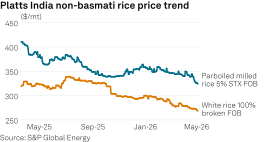
Platts-assessed India Parboiled 5% rice fell by $44/mt since 2021 and $82/mt from 2018 to $324/mt FOB on May 5, according to Platts data.
Mirroring a similar trend, Platts-assessed 100% broken WR fell by $54/mt year over year at $269/mt FOB on May 5.
The Rice Exporters Association of Chhattisgarh (TREACG) has sought immediate government intervention amid import restrictions from African countries in its statement dated May 4.
“Sudden changes in traditional African markets have disrupted shipment planning and contract execution. Exporters are facing order cancellations, payment delays, and inventory pile-ups,” the statement said, adding that such import restrictions are causing “rising risk of cash flow constraints, particularly for MSME exporters.”
Import policy shifts in Africa dent Indian local demand
Many African countries, such as Burkina Faso, Benin, and Senegal, have restricted rice imports by strengthening their import policies.
Benin’s current policy shift has led to a lack of demand for parboiled 5% in the local Indian market, prompting exporters to halt shipments to the country.
“Benin buyers are asking. But exporters don’t want to sell unless they have valid import documents,” a Gurgaon-based exporter said.
Burkina Faso, another destination for parboiled 5% rice, has banned rice imports.
“Indian [PB 5%] FOB is retreating for sure. Let’s see how far the new Benin government goes in establishing these strict import rules, especially since Burkina and Senegal will likely import less now,” a Nigeria-based trader said.
Senegal restricted their imports by allowing only selected companies to have an import quota for rice, according to an official notification released by Senegal’s Ministry of Industry and Trade on April 23.
Since Senegal is one of the major destinations for 100% broken WR, the policy restriction of the country brought uncertainty, adding to softness in Indian 100% broken prices, according to sources.
Meanwhile, China’s concerns about gene modification in Indian rice have led exporters to view exporting to China as risky, despite firm bids from the country.
While a bid for 100% broken from China was reported at $300/mt CFR Huangpu in containers, offers reported on May 4 were lower at $270-$280/mt FOB for breakbulk shipments, according to Platts data.
Indian rice exports have dropped in 2026 to 2.87 million metric tons in January and February, down by 15% year over year in the same period, according to India’s Agricultural and Processed Food Products Export Development Authority.
New crop paddy prices fall
“Amid dented demand and new crop harvest pressure, a soft outlook in the local market has led to further fall in new crop paddy prices by Rupee 5,000/mt ($53/mt) in Chhattisgarh local mandi, with new IR paddy being offered at Rupee 17,000-17,500/mt as of May 4,” Mukesh Jain, president of The Rice Exporters Association of Chhattisgarh, said.
“By this paddy rate, the miller can easily sell at Rupees 28,000/mt, even at Rupees 27,500/mt for Kakinada,” a Delhi-based trader said.
Indian exporters anticipate parboiled 5% prices to further come down as new crop arrivals exert pressure.
To Read more about Rice News continue reading Agriinsite.com
Source : S&P Global