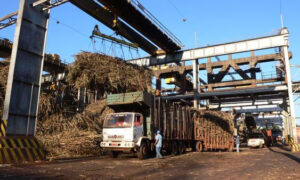
Kenya plans to connect sugar mills to national grid, expand ethanol output


Kenya plans to transform its sugar industry by expanding electricity generation from bagasse and increasing ethanol production. The government aims to allow mills to supply power to the national grid, reduce fuel imports, enhance energy security, and create new revenue streams for factories and farmers.
Kenya is preparing to transform its sugar industry into a broader energy and industrial sector by enabling sugar factories to supply electricity to the national grid and expand ethanol production to reduce fuel imports and strengthen energy security.
Agriculture Cabinet Secretary Mutahi Kagwe outlined the government’s plans during a visit to West Valley Sugar Company, a flagship investment under the Kipchimchim Group, saying the country aims to unlock greater value from sugarcane beyond conventional sugar production, The Eastleigh Voice reported.
According to Kagwe, the government is focusing on creating additional revenue streams through electricity generation, ethanol production and other value-added industrial products linked to the sugar sector.
He said sugar factories hold considerable untapped potential in generating renewable power from bagasse, the fibrous residue left after sugarcane processing.
Referring to West Valley Sugar Company as an example, Kagwe said the factory currently generates around five megawatts of electricity using only part of its available bagasse resource.
He added that the facility could increase generation capacity to as much as 15 megawatts when operating at full potential, creating new opportunities for Kenya’s power sector.
To support this transition, the government is developing frameworks that would allow sugar millers to export surplus electricity to the national grid. The initiative is expected to provide additional income for factories and farmers while strengthening national energy supply.
Kagwe also highlighted ethanol as an important part of the country’s energy strategy, stating that increased domestic production and blending of ethanol with fuel could reduce dependence on imported petroleum products and lower foreign exchange outflows.
He said the government remains supportive of ethanol blending programmes as part of broader efforts to improve energy security.
West Valley Sugar Company currently produces approximately 20,000 litres of ethanol per day, which Kagwe described as an example of the direction the sugar industry could take in the future.
The Cabinet Secretary said recent reforms in the sugar sector have already contributed to stronger output, with production rising by around 22 per cent over the past year following the leasing of state-owned mills and enhanced support for farmers.
He also encouraged domestic investors to expand participation across sugar manufacturing, ethanol production, power generation and value addition, adding that opportunities in the sector should not be limited to foreign investment alone.
To Read more about Ethanol Industry & Bio Energy News continue reading Agriinsite.com
Source : ChiniMandi