Parliament Session: Government says over 23 crore vehicles running on E20 blends without verified engine failures

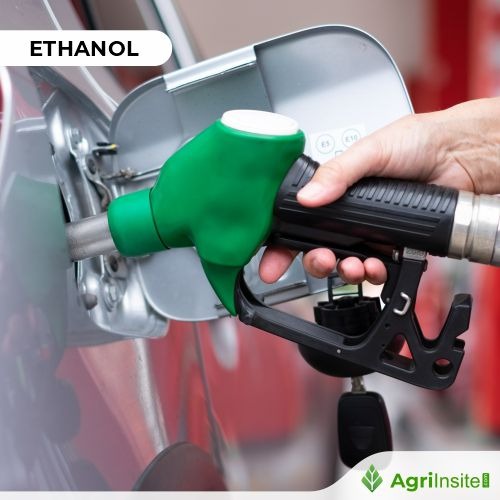
India mandated E20 petrol nationwide from April 1, 2026, replacing the earlier notification. The government said extensive testing confirmed no widespread engine issues, while E20 offers lower emissions, improved performance, and could save about $4 billion annually in fuel imports.
A question was asked in the Parliament whether it is a fact that Government has recently issued a notification to sell 20 per cent ethanol blended petrol across the country mandatory.
MoS, Petroleum and Natural Gas, Suresh Gopi said that the Government issued Notification dated 02.06.2021, as amended in 12.12.2022, directing Oil Companies to sell ethanol blended petrol with percentage of ethanol up to twenty per cent as per the Bureau of Indian Standards (BIS) specifications with effect from 15.12.2022.
In supersession of the aforesaid notification dated 02.06.2021, the Government directed oil companies to sell ethanol blended petrol with percentage of ethanol up to twenty per cent and having minimum Research Octane Number (RON) of 95, across the country with effect from 01.04.2026.
The Ethanol Blended Petrol (EBP) Programme has been implemented through a phased, scientifically validated and consultative process involving NITI Aayog, automobile manufacturers, Oil Marketing Companies (OMCs), Automotive Research Association of India (ARAI), Society of Indian Automobile Manufacturers (SIAM), Indian Institute of Petroleum (IIP) and other technical institutions.
Ethanol is not a new fuel. It has been used globally for over a century, with countries such as Brazil operating higher ethanol blends for decades. In India, the Ethanol Blended Petrol (EBP) Programme commenced with a pilot in 2001, E5 was introduced in 2006, and although blending remained around 1.53% in 2013-14, it has since been increased progressively in a calibrated manner after creating the necessary production capacity, infrastructure and regulatory framework.
E15+ blended petrol has been in widespread use for over three-and-a-half years and E19-E20 fuel for over two-and-a-half years. More than 20 crore two-wheelers and over 3 crore petrol cars have been operating on these blends without any verified evidence of widespread engine failure or vehicle breakdown attributable to ethanol blending. Manufacturer service data confirm that there is no abnormal corrosion, wear or reduction in vehicle life due to E20 fuel. Manufacturerscontinue to honour warranty obligations for vehicles using E20 fuel, providing further confidence in its safety and reliability.
A leading OEM serviced 2.84 crore vehicles during FY 2025-26, including approximately 1.5 crore vehicles that were not originally certified as E20-compatible, and reported no E20-linked corrosion, abnormal wear or reduction in component life. A leading 2-wheeler company has reported similar field experience. One OEM recently stated that data from 1.4 crore E20-operated vehicles tracked over an extended period showed no evidence of ethanol-induced corrosion.
ARAI reaffirmed that vehicles undergo rigorous international-standard validation before reaching consumers.
With regard to mileage, studies by Government agencies and automobile manufacturers indicate that fuel efficiency is influenced by several factors, including driving conditions, driving habits and vehicle maintenance. Any reduction in fuel economy in certain E10-designed vehicles is generally limited to about 3-5%. The use of E-20 gives better acceleration, better ride quality and most importantly, lowered carbon emissions by approximately 30% as compared to E10 fuel.
Ethanol’s higher-octane number (~108.5 compared to petrol’s 84.4) makes Ethanol-blended fuel à valuable alternative for higher-octane requirements that is crucial for modern high-compression engines. Vehicles tuned for E20 deliver better acceleration which is a very important factor in city driving conditions. Additionally, Ethanol’s higher heat of vaporization reduces intake manifold temperatures, increasing air-fuel mixture density and boosting volumetric efficiency. Further, E20 results in better anti knocking properties and performance. In most parameters including drivability, startability, metal compatibility, plastic compatibility, there are no issues.
As per the “Roadmap for Ethanol Blending in India 2020-25” a successful E20 programme can save the country about 4 billion US Dollar (USD) per annum.
To Read more about Ethanol Industry & Bio Energy News continue reading Agriinsite.com
Source : ChiniMandi